NEW ORLEANS, LA – March 16, 2026 – PRESSADVANTAGE –
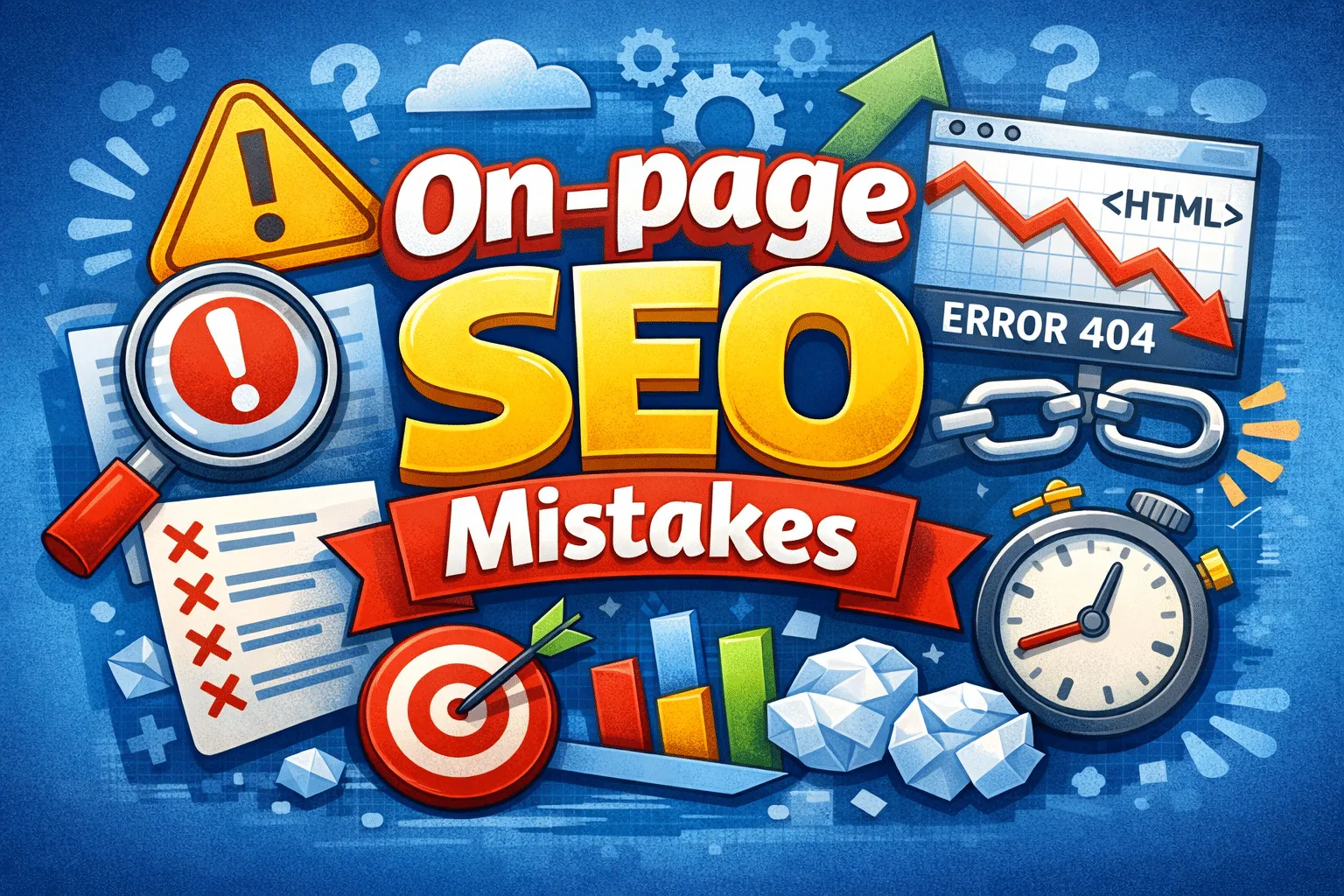
Big Easy SEO published a technical guide on its company blog identifying ten on-page SEO errors that reduce a website’s organic search rankings on Google. The guide, titled “10 Common On-Page SEO Mistakes That Are Hurting Your Google Rankings,” presents each error with an explanation of how it affects search engine crawling, indexing, or ranking, followed by a specific correction procedure. The guide states that most business websites lose rankings and traffic because of avoidable on-page optimization errors and that correcting these issues is often the fastest path to improved organic performance without additional advertising expenditure.
The first error addressed in the guide is keyword stuffing, which the guide defines as the practice of inserting a target keyword into page content an unnaturally high number of times. The guide states that Google’s spam detection systems now flag keyword-stuffed content and that exact-match keyword density has virtually no correlation with modern search rankings. The correction procedure specifies placing the primary keyword in the first 100 words, the H1 heading, one or two H2 headings, and naturally throughout the body text without forced repetition. The second error is duplicate or missing title tags, where multiple pages share the same title tag or pages lack a title tag entirely, which prevents search engines from distinguishing the content and purpose of each page. The guide notes that 92.6 percent of top-ranking pages include a title tag, and that when one is missing, Google rewrites it or substitutes the H1 heading, which rarely captures the page’s intended ranking target. The third error is absent or poorly written meta descriptions, which the guide states do not directly affect ranking position but significantly influence click-through rate from the search results page, determining whether a user clicks or moves to a competing result.
The fourth error is unoptimized images, which the guide addresses in two dimensions: missing alt text attributes that prevent search engines from understanding image content and indexing it in image search results, and oversized image files that increase page load time and degrade both user experience and Core Web Vitals performance scores. The fifth error is thin content, which the guide defines as pages with insufficient depth or length to satisfy the search intent behind the query. The guide references Google’s Helpful Content system, which prioritizes well-researched, user-centered content and demotes pages that offer minimal informational value. The correction procedure calls for covering the topic comprehensively rather than targeting a minimum word count, since the depth required varies by query type and competitive landscape. The sixth error is slow page speed, which the guide identifies as a ranking factor with measurable impact on user behavior, citing data showing that bounce rates increase by 32 percent when page load time increases from one second to three seconds. The guide specifies image compression, code minification, browser caching, and content delivery network implementation as the primary speed correction methods.
The seventh error is poor internal linking structure, which the guide states limits the distribution of page authority across the site and reduces the time users spend navigating between related pages. The guide cites research indicating that pages with strong internal linking receive 40 percent more organic traffic than pages with weak or absent internal links. The eighth error is missing or improperly structured header tags, where pages lack a clear H1 heading or use heading hierarchy out of sequence, which prevents search engines from parsing the content structure and identifying the primary topic and subtopics of the page. The ninth error is neglected mobile optimization, which the guide identifies as a critical issue given that mobile devices account for over 63 percent of all Google searches. The guide states that sites not optimized for mobile screen sizes, touch navigation, and mobile loading speeds are at a ranking disadvantage under Google’s mobile-first indexing approach. The tenth error is broken or misconfigured URL structures, including duplicate URLs for the same content, non-descriptive URL strings, and missing redirects from old URLs to current pages, which the guide states create crawl inefficiencies and split ranking signals between multiple URLs targeting the same content.
The guide frames the ten errors as a diagnostic checklist for business owners whose websites are not performing as expected in organic search results, noting that the errors appear repeatedly across business websites in every industry and that in most cases, targeted corrections produce measurable ranking improvements within weeks. The guide distinguishes on-page SEO errors from off-page factors such as backlink profiles and domain authority, noting that on-page errors are within the direct control of the website owner and do not require external link acquisition or third-party cooperation to resolve. The guide also addresses the relationship between on-page optimization and paid advertising, stating that fixing on-page errors improves the conversion efficiency of traffic already arriving at the site, which reduces the cost per acquisition regardless of whether the traffic source is organic search, paid search, or social media referrals.
“The guide was structured as a diagnostic sequence rather than a general overview because the correction for each error is specific and measurable, and the business owner or their development team can work through the list in order and verify that each correction has been implemented before moving to the next one,” said a representative of Big Easy SEO. “The ten errors were selected because they account for the majority of on-page ranking losses observed across the client sites and audit requests the agency processes, and because each one can be corrected without rebuilding the website or changing the content management platform.”
Big Easy SEO is a digital marketing and web design agency that provides search engine optimization, pay-per-click advertising, content marketing, social media marketing, web design and development, conversion rate optimization, lead generation, and white label services. The company is headquartered in New Orleans and maintains service locations across Louisiana, Texas, California, Colorado, Mississippi, and Washington. The company can be reached at 504-475-2049 or through www.bigeasyseo.com.
###
For more information about Big Easy SEO, contact the company here:
Big Easy SEO
Teresa Horton
504-475-2049
info@bigeasyseo.com
517 Soraparu St #103, New Orleans, LA 70130, United States